 Pest Control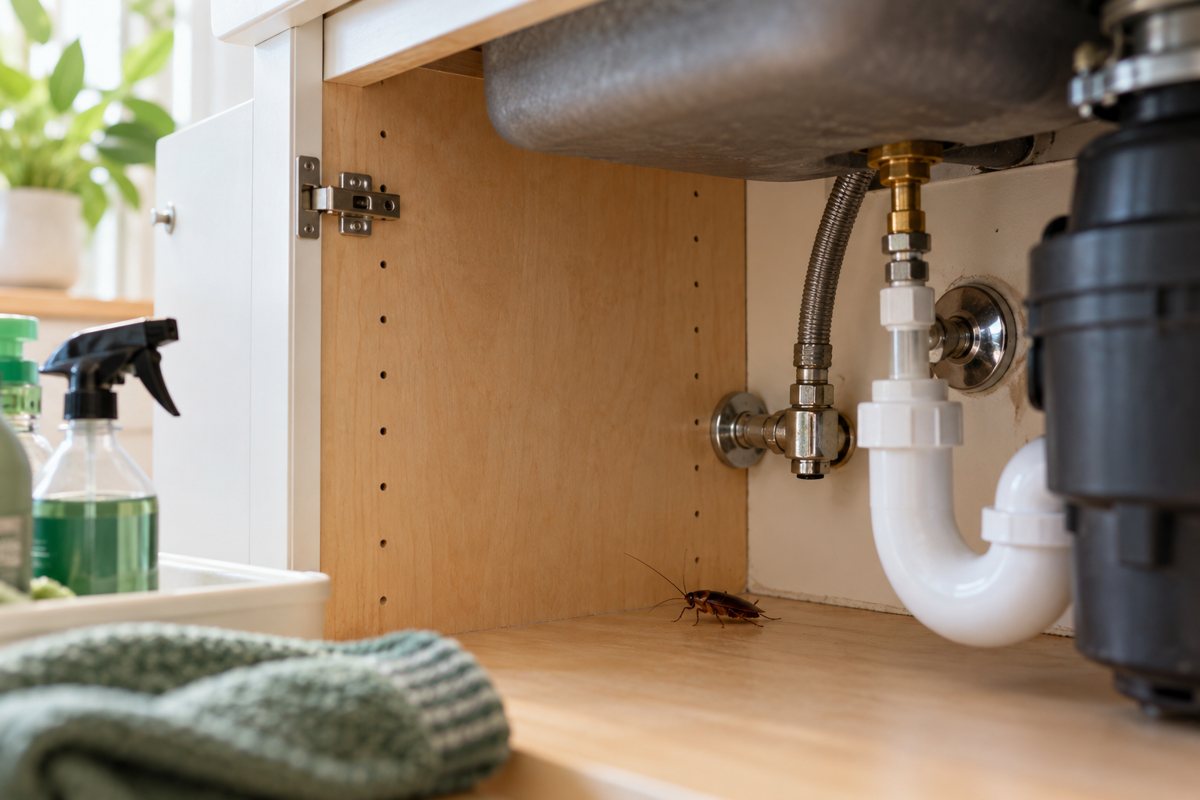
The practical starting point
A kitchen sighting deserves identification and a clear account of activity. Use the location, frequency and accessible evidence to decide what assessment is needed.
A sighting is a starting point
Note the room, approximate time and location. Was the insect near a cupboard, plumbing, an appliance or an exterior door?
Those details give the enquiry a useful starting point.
A photograph can help if it is taken without moving unsafe equipment or handling the insect.
Do not describe every small brown insect as a cockroach if identification is uncertain.
The question is what evidence supports the concern and what accessible areas need checking.
A single sighting does not give a reliable count of insects or a complete explanation of the source.
Common species are not identical
UC IPM identifies five cockroach species commonly regarded as pests in California: German, brownbanded, oriental, American and Turkestan. [1]
For a household enquiry, you do not need to choose one from an online image. Describe where activity occurs and provide a clear photograph if possible.
Species matters because the environment and appropriate management can differ. Ask the assessor how identification affects the proposed scope.
A service description that treats every cockroach as the same problem may leave important questions unanswered.
Look for a pattern around accessible areas
A useful record distinguishes repeated activity in one cupboard from occasional sightings near a door. Note visible spotting or other evidence without dismantling the room.
UC guidance describes cockroaches as generally nocturnal and discusses monitoring as part of management. [1] That helps explain why the lack of daytime sightings cannot settle the question.
If activity happens at night, record it when you notice it.
There is no need to stay awake deliberately or pull heavy appliances out to collect evidence before making a call.
Food and water questions are practical
Review obvious spills, food storage and known leaks. Explain the conditions to the provider rather than assuming one change will solve the whole problem.
EPA’s school guidance includes food containment and moisture maintenance in pest management. [2] Those principles can inform sensible household questions, though a school program is not a diagnosis of your kitchen.
Treat the review as preparation for an assessment.
A clean room does not exclude hidden activity, and sanitation alone should not be presented as a guaranteed solution.
Do not scatter belongings to prepare
Ask what needs moving before you empty cupboards or relocate stored items. Unplanned movement can complicate inspection and make the affected area harder to describe.
Tell the provider about food-contact surfaces, pet belongings, sensitive occupants and difficult access. These details belong in the preparation discussion.
A useful checklist names the areas that need access and the items to protect.
It should not force you to guess whether every appliance, cupboard and drawer needs clearing before the method has been explained.
Understand treatment and monitoring separately
Ask what the proposed service includes: inspection, targeted treatment, monitoring, owner actions and follow-up. Those parts can have different roles.
EPA’s IPM framework describes identifying the pest and evaluating options before selecting controls. [3] In a quote, this means the method should connect to the findings rather than simply promise a stronger application.
Ask what will be checked later and what you should record.
A provider’s instructions should explain how observations are used, not just tell you to call again if you feel worried.
Past product use needs to be disclosed
Record product names, application locations and dates where known. Keep the information available for the assessment.
Do not add another product merely because an insect remains visible.
More product is not automatically better, and the label controls where and how a product may be used.
Ask the provider whether cleaning or owner actions will affect the chosen method.
Follow the instructions supplied for the actual work rather than combining advice from several unrelated treatment descriptions.
Shared buildings need shared-scope questions
In an apartment or commercial building, tell the provider about common spaces and the person who authorizes access. Do not assume the quote covers adjoining units.
A landlord or manager may need to coordinate inspection boundaries. The service should explain what can be checked in the unit and what requires separate permission.
For a business, add storage, delivery and opening-hour constraints to the discussion.
These are practical scheduling facts; they do not justify a claim that service automatically certifies regulatory compliance.
Review the result with a dated record
Keep observations in one place.
Record where new activity occurs, whether it is the same area and whether the provider has asked you to monitor particular locations.
If a new sighting appears after service, ask how it fits the original plan.
The observation needs assessment before it is treated as proof of failure or a reason for immediate additional application.
The written scope should make follow-up terms understandable.
Ask whether further inspection, another visit or excluded work is involved, especially if the concern has moved beyond the agreed area.
An example: repeated cupboard sightings
Imagine seeing a small cockroach near the same cupboard on several evenings.
The household can record the location and obtain a photograph without pulling out an appliance or applying several products.
At the enquiry, explain whether the cupboard is near plumbing, food storage or an exterior wall.
Ask which areas need access and what preparation is required before inspection.
If another insect is later seen near the patio door, keep that observation separate. Identification may show a different concern.
A record that distinguishes rooms and evidence is more useful than treating every sighting as confirmation that the whole kitchen is equally affected.
Make your El Cajon enquiry specific
Have your ZIP code, property type, affected rooms and activity history ready. Photographs are helpful. However, you can call without a confirmed species name.
Pest Control El Cajon serves qualifying addresses in 92019, 92020 and 92021. Ask about cockroach control and the preparation needed for your premises.
The next step should give you a clearer inspection or service decision. You should understand the scope, precautions, quote factors and follow-up questions before approving work.
A simple decision checklist
Use this table to organize observations and questions. It does not diagnose the pest or prescribe a treatment.
The next step should fit the evidence and the property, with appropriate professional assessment where needed.
| What you notice | What to record or do | What to ask |
|---|---|---|
| Repeated cupboard activity | Note exact location | Which areas are assessed? |
| Previous product use | Keep the product name | How does it affect the next step? |
| Shared building concern | Identify access authority | Are common spaces included? |
Keep a copy of the scope and any instructions alongside your notes.
If observations change, explain the new location or timing separately so the provider can review the situation accurately.
The example above is hypothetical. It illustrates a decision process and is not a customer story, completed project or claim about a treatment result.
Frequently asked questions
Does one sighting prove a large infestation?
No. The location, evidence and inspection findings are needed to assess the concern.
Should I empty the entire kitchen?
Wait for a checklist matching the planned inspection and treatment.
Can I compare quotes just by price?
Compare areas, methods, preparation, monitoring and follow-up first so you know what each price covers.
Sources and further reading
References support the factual pest information in this guide. The checklists and hypothetical examples provide practical questions for an enquiry.
Follow instructions for the actual assessed work rather than treating general educational guidance as a treatment plan.
Sources accessed October 8, 2026. Publication dates on linked resources may be earlier. Coverage, pricing and methods must be confirmed for the actual property and service.
Discuss the relevant service
Read the service scope, then call with your address and observations. Qualifying service addresses are within 92019, 92020 or 92021.
Call (619) 478-0338