 Pest Control
Pest & Rodent Exclusion
Entry-point assessment and agreed sealing work for pest and rodent access.
Explore pest & rodent exclusionScratching, gnaw marks or droppings can point to rodent activity.
Start with identification and access: where the animal is active, how it may be entering and what areas need assessment.
Call to discuss your property and appointment availability.
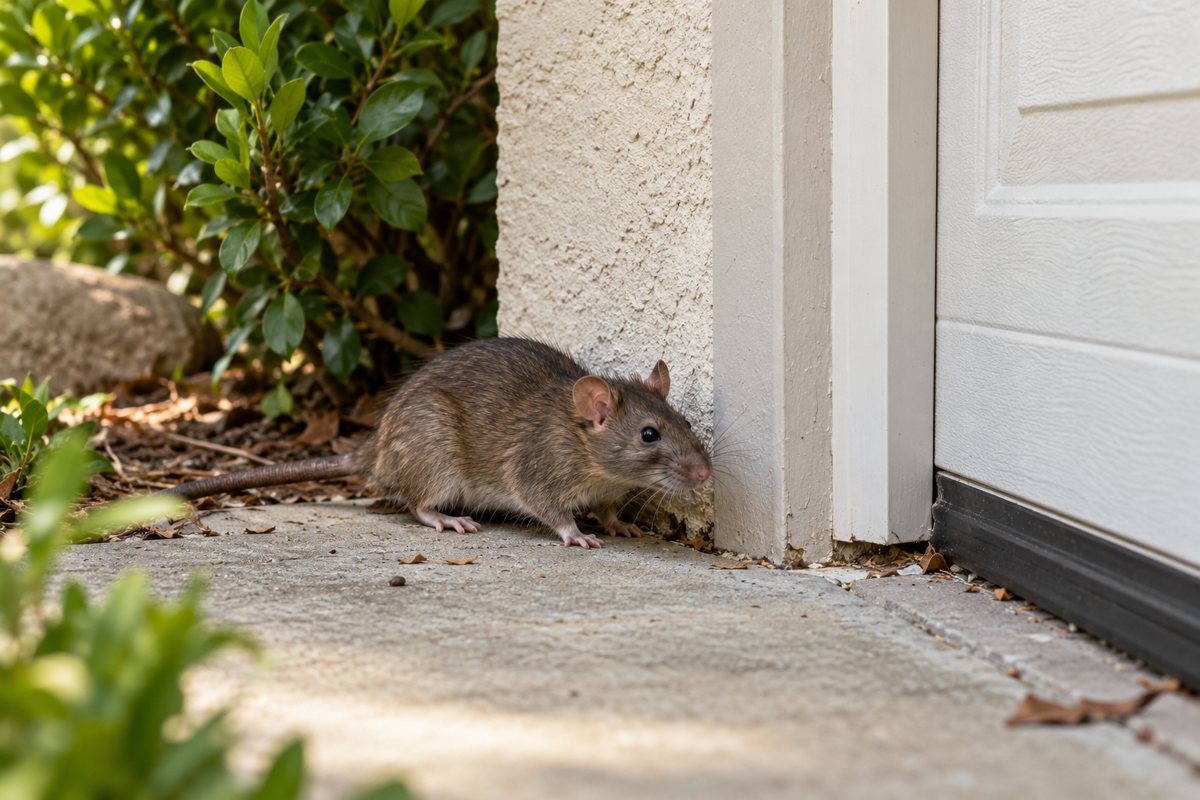
You do not need a confirmed diagnosis to make an enquiry. Describe what is visible, where it happens and whether the activity is recurring.
These examples help you prepare a useful account.
Rodent control in El Cajon considers more than the latest sighting.
Explain whether activity is near ground level, in a roof space, around outdoor storage or inside an occupied room.
Rats and mice can need different devices, access checks and monitoring. Photographs of safely visible evidence can support the enquiry.
Do not handle animals or disturb droppings to obtain a sample for the call.
A control proposal addresses the current activity; exclusion considers how animals may gain access.
Ask whether both are included or whether sealing work will be quoted separately.
Accessible inspection areas may include doors, utility penetrations, garage edges and roofline openings. The building and access arrangements determine the scope.
A control visit alone should not be assumed to include repairs to every opening.
Treatment choices need to account for occupants, pets, children, wildlife and where devices can be placed. Ask how equipment will be protected, checked and removed.
Product-specific information matters if a rodenticide is proposed. Do not assume any bait is harmless or place household products into voids while waiting.
The provider should explain the selected approach and instructions before you agree to it.
If droppings or nesting materials are present, tell us their location and extent. Avoid sweeping or vacuuming dry rodent waste before obtaining appropriate guidance.
Cleanup, sanitation, insulation removal and attic restoration are not automatically part of a rodent-control quote.
Discuss the affected area and confirm which work is available, which is included and whether another specialist is needed.
Note the time and location of noises or sightings without opening walls or entering unsafe spaces. Clear records help the provider compare activity over time.
Monitoring, access repairs and changes in storage can affect the plan. Ask what counts as a follow-up trigger and what access is needed for checks.
No fixed number of visits or permanent exclusion outcome is promised from a website description.
Start with your service address and a short description of the concern.
Mention when activity began, which parts of the property are affected and whether previous work or product use is documented.
The next discussion establishes the relevant assessment, access arrangements and the work that may be needed.
You can ask about the method, preparation and what information is required for a quote.
Before arranging service, clarify the included areas, exclusions and follow-up terms.
A useful scope makes it easier to understand the next decision and avoid assumptions about related repairs or specialist work.
Keep instructions available afterward and report observations by date and location.
The provider can then review them against the actual work rather than relying on a broad description that the problem continues.
The identified concern, property layout, accessible areas and proposed work affect the scope. Extra structures, restricted spaces or additional tasks can require further discussion.
Ask whether inspection, treatment, monitoring and any prevention work are included.
Do not assume a general service quote also includes structural repairs, contamination cleanup or specialist documents.
Call with the property details and ask what is needed to establish the quote. Confirm the price basis and any inspection charge before booking.
Compare the work boundaries and follow-up terms as well as the price.
Our rat & mouse control information is organized around your next practical decision: understanding the activity, asking about the scope and preparing the property appropriately.
Tell us about occupant needs, pets and difficult access.
Method-specific precautions should be explained before the work is arranged, rather than replaced with a blanket safety claim.
Ask for clarification whenever a task or term is uncertain.
A service decision should be supported by the actual proposal, clear instructions and business information you can verify.
Coverage is limited to qualifying addresses in ZIP codes 92019, 92020 and 92021.
Some nearby communities span these and other ZIP codes, so use the actual address when checking availability.
Whether the property is in central El Cajon, Fletcher Hills, Bostonia, Granite Hills or another listed community, the ZIP boundary remains the starting point.
Call to confirm any boundary uncertainty before arranging a visit.
View all covered communitiesNo. Trapping addresses animals; exclusion addresses access openings. Confirm both scopes.
Do not dry-sweep or vacuum rodent waste. Obtain appropriate cleanup guidance before disturbing it.
Restoration and contamination cleanup require separate scope confirmation. They are not assumed inclusions.
Entry-point assessment and agreed sealing work for pest and rodent access.
Explore pest & rodent exclusionOngoing pest-service options, scope and plan questions for El Cajon properties.
Explore ongoing pest preventionIn ZIP code 92019, 92020 or 92021? Call with your service address and pest concern to discuss scope and current availability.
Service is limited to qualifying addresses within these three ZIP codes.