 Pest Control
Cockroach Control
Cockroach assessment, monitoring questions and treatment planning for homes and businesses.
Explore cockroach controlA line of ants across the counter is a symptom worth investigating.
The useful question is what is drawing them in, where they are entering and which ant is involved.
Call to discuss your property and appointment availability.
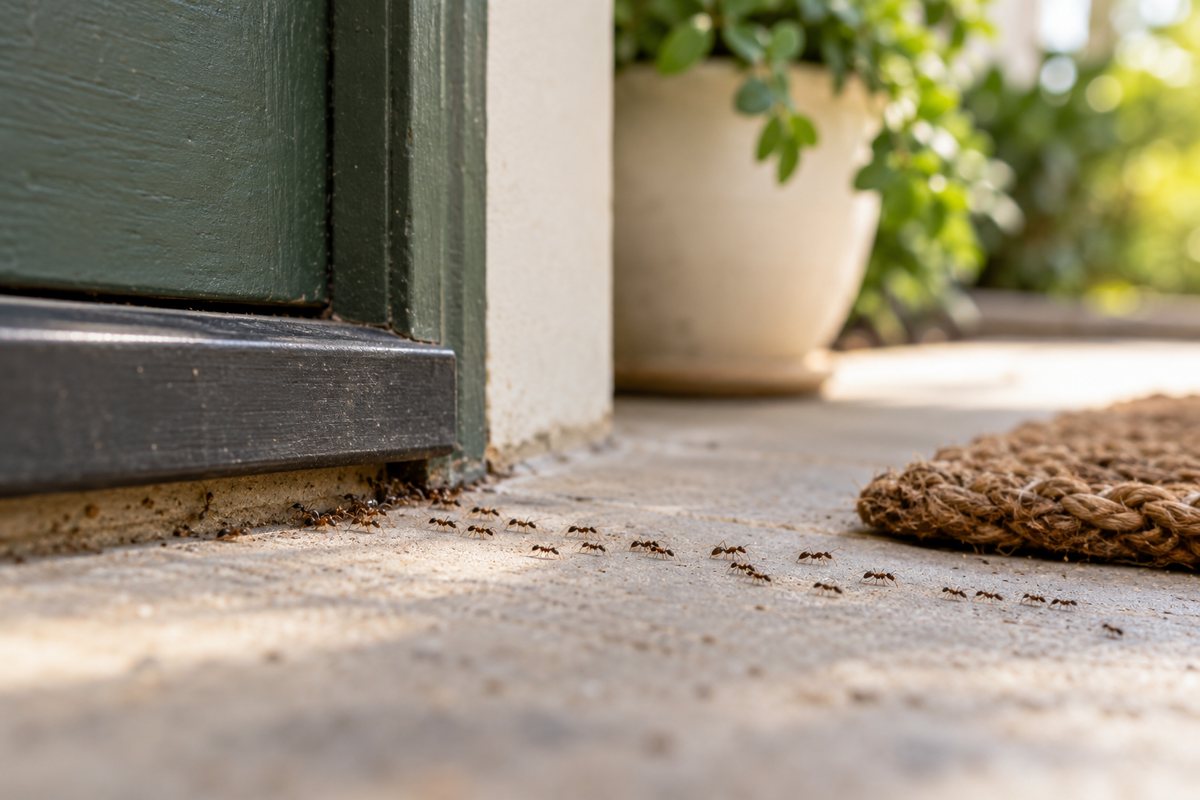
You do not need a confirmed diagnosis to make an enquiry. Describe what is visible, where it happens and whether the activity is recurring.
These examples help you prepare a useful account.
Ant control in El Cajon begins with identification and the pattern of activity.
Ants near a leaking sink raise different questions from a trail along a patio wall. Describe where you first noticed them and whether the trail changes.
Winged ants can be confused with termite swarmers. If you are unsure, share a photograph or arrange an assessment. The website can explain differences.
However, it cannot diagnose an infestation from a description alone.
Removing ants from a worktop may address the immediate inconvenience without explaining the route into the room.
Inspection considers accessible entry points, activity around the building and conditions that may support the problem.
Treatment options depend on identification and site conditions. Ask how the proposal addresses current activity and what changes are recommended around food storage, moisture or access.
An outdoor zero-ant promise is not a realistic way to define service.
Tell us whether ants are indoors, outdoors or both. Include recent leaks, changes in irrigation, food spills and potted plants near affected areas.
You do not need to know the species before calling.
If you have already applied a product, note its name and the treated area.
That information helps the provider assess the next step and explain whether cleaning or further action could interfere with the proposed approach.
Keep food covered and make the affected surfaces available for inspection. Avoid combining several products in an attempt to speed up the process.
Ask for instructions that match the selected method.
Follow-up questions should include what activity to record, what changes to expect and when to contact the provider again.
The time needed varies; an immediate absence of visible ants does not establish that every underlying cause has been addressed.
A new trail in another room is useful information, not proof that one product failed or another product is needed.
Record the location and whether food or water sources were present.
For a business or apartment, mention shared walls and neighboring activity when known.
The assessment can then distinguish the area you control from areas requiring property-manager access or separate coordination.
Start with your service address and a short description of the concern.
Mention when activity began, which parts of the property are affected and whether previous work or product use is documented.
The next discussion establishes the relevant assessment, access arrangements and the work that may be needed.
You can ask about the method, preparation and what information is required for a quote.
Before arranging service, clarify the included areas, exclusions and follow-up terms.
A useful scope makes it easier to understand the next decision and avoid assumptions about related repairs or specialist work.
Keep instructions available afterward and report observations by date and location.
The provider can then review them against the actual work rather than relying on a broad description that the problem continues.
The identified concern, property layout, accessible areas and proposed work affect the scope. Extra structures, restricted spaces or additional tasks can require further discussion.
Ask whether inspection, treatment, monitoring and any prevention work are included.
Do not assume a general service quote also includes structural repairs, contamination cleanup or specialist documents.
Call with the property details and ask what is needed to establish the quote. Confirm the price basis and any inspection charge before booking.
Compare the work boundaries and follow-up terms as well as the price.
Our ant control information is organized around your next practical decision: understanding the activity, asking about the scope and preparing the property appropriately.
Tell us about occupant needs, pets and difficult access.
Method-specific precautions should be explained before the work is arranged, rather than replaced with a blanket safety claim.
Ask for clarification whenever a task or term is uncertain.
A service decision should be supported by the actual proposal, clear instructions and business information you can verify.
Coverage is limited to qualifying addresses in ZIP codes 92019, 92020 and 92021.
Some nearby communities span these and other ZIP codes, so use the actual address when checking availability.
Whether the property is in central El Cajon, Fletcher Hills, Bostonia, Granite Hills or another listed community, the ZIP boundary remains the starting point.
Call to confirm any boundary uncertainty before arranging a visit.
View all covered communitiesNo. Winged ants and termites can be confused. Identification should precede a termite-treatment decision.
It can remove visible activity, but entry points and other conditions may still require assessment.
No. Species, activity and the property influence the appropriate approach.
Cockroach assessment, monitoring questions and treatment planning for homes and businesses.
Explore cockroach controlTermite inspection and treatment enquiries with clear scope and method questions.
Explore termite inspection & treatmentIn ZIP code 92019, 92020 or 92021? Call with your service address and pest concern to discuss scope and current availability.
Service is limited to qualifying addresses within these three ZIP codes.