 Pest Control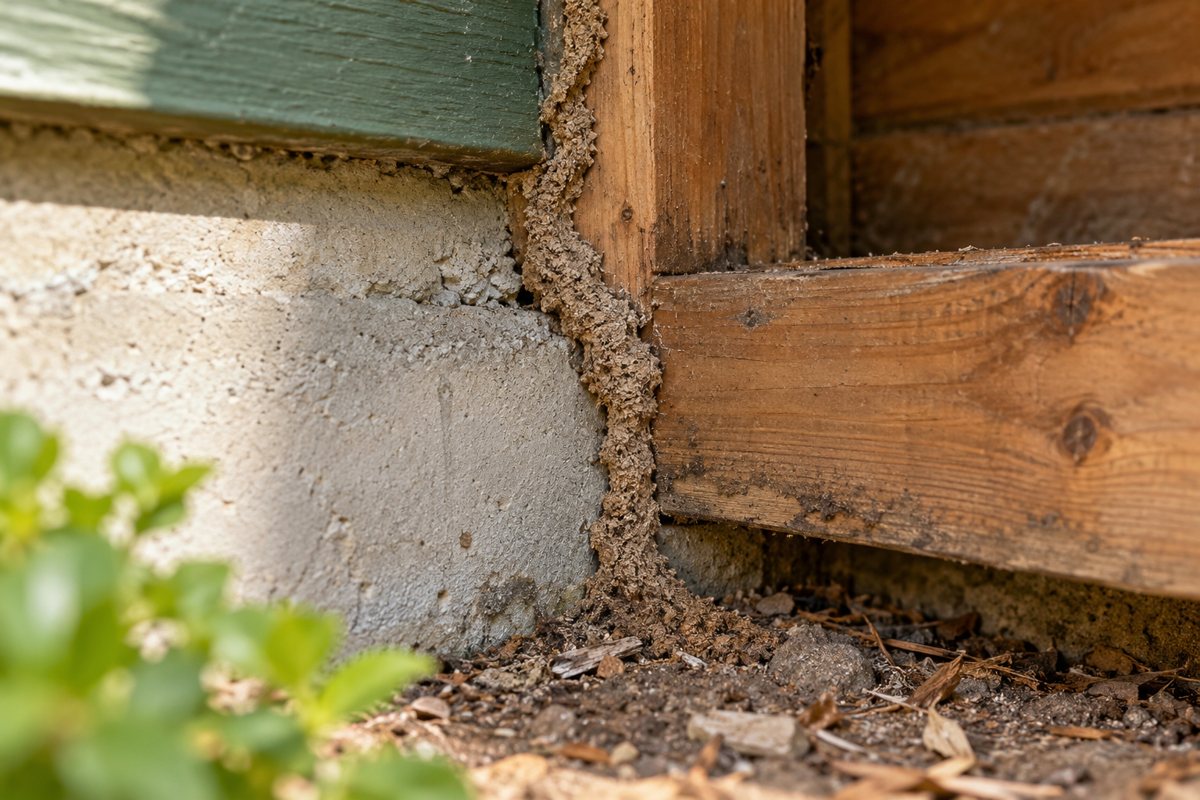
The practical starting point
Termite signs need identification before treatment decisions. Drywood pellets and subterranean mud tubes raise different questions. However, neither should be interpreted without the property context.
Why the distinction matters
Drywood and subterranean termites have different habits and inspection clues. UC publications discuss them separately because understanding the pest helps guide management. [1][2]
For a homeowner, the useful takeaway is simple: avoid selecting a treatment from the word termite alone.
Ask what was identified, where the evidence was found and how the proposed method fits the findings.
A provider should be able to explain the reasoning in plain English.
You do not need to learn every species name to understand the inspection report or compare the scope of a proposal.
Pellets near timber raise an inspection question
Drywood termite activity can be associated with small fecal pellets near affected wood. UC IPM describes those pellets as an inspection clue. [1]
If you find a small pile, take a photograph of the material and its location. Note whether it has appeared before.
Avoid assuming that every grain of debris is a termite pellet.
The location matters as much as the close-up. A pile on a windowsill, below a joint or beside stored material gives different context.
An inspection can assess the evidence and explain what can and cannot be concluded.
Mud tubes are another kind of clue
Subterranean termites may construct earthen tubes that help connect activity with wood or other parts of a structure.
UC guidance explains why those tubes are important to inspection. [2]
Do not break a suspected tube merely to produce a clearer photograph. Record what you can see safely and describe where it is located.
The provider can decide how to examine the evidence.
A tube-like mark is not a full account of the building.
Inspection scope, accessible areas and other findings still matter when deciding what further work is needed.
Winged ants can be mistaken for termites
EPA notes differences in wings and antennae that can help distinguish ants from termites.
Ant front wings are longer than hind wings, while termite wings are more similar in length. [3]
Those features are useful when a specimen or clear image is available.
They are less useful when the only evidence is a vague memory of a flying insect.
Ask for identification before approving treatment.
Keep the explanation tied to the evidence found at your property rather than a generic online photograph that happens to look similar.
Inspection limits deserve a clear explanation
A property may contain enclosed timber, blocked storage areas, limited attic access or a crawlspace that cannot be reached safely.
These conditions affect what an inspection can observe.
Ask which parts were examined and which were inaccessible. A limitation is information for the next decision, not something to hide behind a reassuring headline.
If you need a particular report for a transaction, say so before booking.
An informal enquiry, a treatment quote and a prescribed real-estate document are not automatically the same service.
Treatment is selected from the findings
EPA describes several termite-control approaches and emphasizes correct product use and relevant precautions. The available choice depends on the pest and the property. [3]
Ask what the proposed work covers: an accessible local area, a wider part of the structure or another defined scope. Also ask what is excluded.
Fumigation, heat, structural repair and specialist reporting need separate capability confirmation.
Educational discussion of those methods does not mean every provider supplies them or that your home needs a particular one.
Moisture and maintenance belong in the conversation
Leaks, drainage and contact between wood and surrounding conditions can be relevant to a property review. EPA lists maintenance measures as part of termite prevention. [3]
Tell the inspector about known leaks, previous repair work and accessible problem areas.
Do not hide a maintenance concern because you expect the pest service to fix everything.
Ask who is responsible for recommended repairs and whether those repairs are included.
Pest treatment, moisture work and structural assessment can involve different people and different proposals.
Compare quotes by scope rather than headline price
A lower price is hard to evaluate without knowing what is included. Put the inspection findings and work boundaries beside each quote before comparing totals.
Ask about access, preparation, follow-up, written terms and any specialist arrangements. If a guarantee is offered, read the covered circumstances and exclusions.
Avoid assuming that the longest or most dramatic treatment description is the best option.
The proposal should explain why its scope fits your property, and what evidence supports that decision.
Prepare for a useful inspection
Have previous reports and treatment documents available. Note where new evidence was found and whether you have seen it repeatedly.
Explain access restrictions before the appointment. Ask whether stored items need moving and which areas should remain undisturbed.
Preparation should make the inspection useful without destroying the clues you want assessed.
For an El Cajon enquiry, use the actual address and ZIP code.
The approved service coverage is 92019, 92020 and 92021; nearby community names do not automatically establish coverage outside those ZIP codes.
An example: pellets below a window frame
Imagine finding small debris below a timber window frame after cleaning the room.
Rather than selecting tenting from an online search, photograph the material and the frame, then note whether the debris returns.
An inspector can assess the evidence and explain the accessible findings.
If enclosed areas cannot be checked, those limits belong in the report and the treatment discussion.
The homeowner can then ask whether the proposal addresses pest activity, damaged wood or both. A separate repair decision may still be needed.
This sequence keeps an unfamiliar sign from becoming an unsupported conclusion about hidden damage throughout the building.
Questions to ask after the findings
Ask what was identified, what evidence supports it and which areas could not be checked. Then ask how each recommended action connects to those findings.
Keep treatment and repair decisions separate where their scopes differ. If something is unclear, request a plain-language explanation before approving the work.
A useful result from the inspection is a clearer decision, not simply a frightening photograph.
You should understand the next step, the preparation required and the limits of what the proposed work addresses.
A simple decision checklist
Use this table to organize observations and questions. It does not diagnose the pest or prescribe a treatment.
The next step should fit the evidence and the property, with appropriate professional assessment where needed.
| What you notice | What to record or do | What to ask |
|---|---|---|
| Pellet-like material | Photograph location and recurrence | What evidence confirms identification? |
| Suspected mud tube | Record without breaking it | Which accessible areas need checking? |
| Possible wood damage | Describe the affected component | Are treatment and repair separate decisions? |
Keep a copy of the scope and any instructions alongside your notes.
If observations change, explain the new location or timing separately so the provider can review the situation accurately.
The example above is hypothetical. It illustrates a decision process and is not a customer story, completed project or claim about a treatment result.
Frequently asked questions
Does every termite problem require tenting?
No treatment should be chosen without assessment of the pest, findings and property. Confirm the provider’s available methods.
Can pellets prove the extent of damage?
No. Visible pellets are not a structural assessment or a complete map of hidden activity.
Are termite treatment and wood repair the same quote?
Not automatically. Ask which work is included and who will assess or repair damaged components.
Sources and further reading
References support the factual pest information in this guide. The checklists and hypothetical examples provide practical questions for an enquiry.
Follow instructions for the actual assessed work rather than treating general educational guidance as a treatment plan.
Sources accessed October 8, 2026. Publication dates on linked resources may be earlier. Coverage, pricing and methods must be confirmed for the actual property and service.
Discuss the relevant service
Read the service scope, then call with your address and observations. Qualifying service addresses are within 92019, 92020 or 92021.
Explore termite inspection & treatment
Call (619) 478-0338