 Pest Control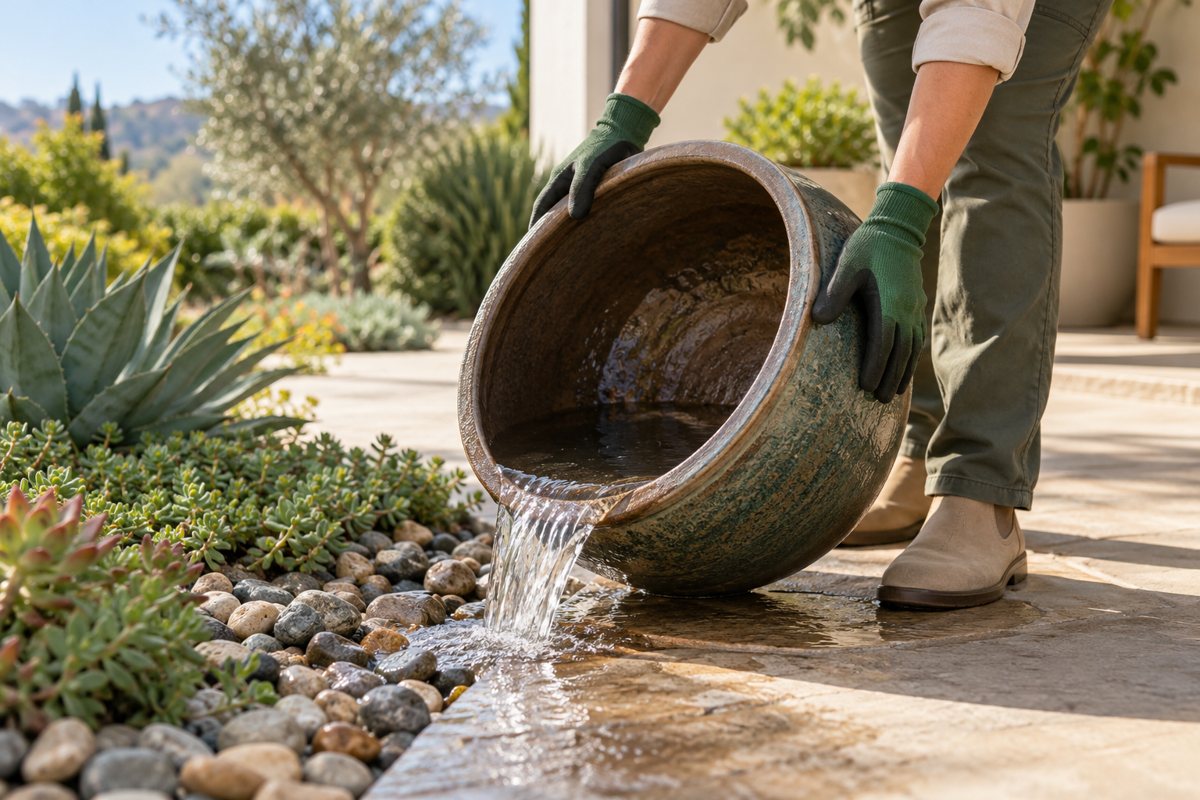
The practical starting point
A useful yard review starts with water-holding items, access and maintenance questions. Build a repeatable checklist rather than assuming one outdoor treatment can prevent every mosquito.
Start with a manageable yard review
Walk through the parts of the yard you can access safely and note containers or other items that can hold water.
Keep the review focused on your property and the areas you control.
Do not enter neighboring land or inspect drains that require specialist access.
If the concern lies outside your boundary, record the location and ask the relevant organization for guidance.
The aim is a practical list you can revisit.
It is more useful than a long collection of tips that cannot be applied to your own patio, storage and planting.
Containers can be overlooked
San Diego County identifies standing water in common backyard sources as an important prevention concern. [1] Think about plant saucers, stored containers and items that refill after watering or rain.
For each item, ask whether it can be kept dry, maintained or moved appropriately.
Do not treat every water feature as something to empty without considering its purpose.
Record the action needed and who will do it.
A shared property may require agreement with the manager, while an ornamental pond needs a different discussion from an unused bucket.
Include irrigation and drainage questions
If a wet area keeps returning, note when it appears and whether it follows watering or rain.
Explain the pattern when asking about yard service or maintenance.
A pest quote is not automatically a drainage or irrigation repair quote. Ask which observations the provider can assess and which work belongs to another trade.
Avoid diagnosing every damp patch as a breeding source.
The provider or county resource can help clarify the next step, while your record makes the location and recurring conditions easier to discuss.
Understand county mosquito resources
The county mosquito program provides prevention information and reporting routes. [2] These resources can be useful when the problem involves conditions beyond the spaces you manage.
Private yard service and public vector-control assistance have different scopes.
Do not assume a private quote includes work on public land or that a county service covers the same work as a commercial provider.
Check current assistance through the official county source. This article uses local guidance without inventing a current El Cajon infestation rate or neighborhood-specific mosquito count.
Do not identify a mosquito from a bite alone
San Diego County provides information about invasive Aedes mosquitoes as well as other local mosquito concerns. [2] A bite location by itself does not establish the species or source.
For an enquiry, describe where and when outdoor activity is noticed. Explain whether it affects a patio, yard or business entrance.
Keep health concerns separate from property assessment.
Pest service should not be presented as a medical diagnosis, prevention of every bite or a guarantee against mosquito-borne illness.
Ask what outdoor service actually covers
A useful proposal names the areas assessed and the work included. Ask whether it involves source-reduction recommendations, monitoring, treatment or follow-up.
Explain ponds, flowering plants, wildlife and pet-use areas before a method is chosen. Precautions need to fit the actual work and site.
Do not assume that a general outdoor application covers every plant, container or adjoining space.
The written boundaries make the quote understandable and prevent confusion about owner maintenance responsibilities.
Prepare the yard with the actual checklist
Ask which access routes need clearing and which belongings should be moved. Toys, seating and pet items may need method-specific instructions.
Avoid using a generic waiting period from another product. Re-entry and use instructions depend on the selected approach and should be supplied for the actual work.
If the checklist conflicts with how the household uses the space, raise that before the visit.
Preparation should be workable and clear rather than something improvised after equipment arrives.
A recurring review beats a one-off tidy
Some yard items refill or return to use after they have been checked. Keep the prevention list somewhere accessible so those items can be reviewed again.
Use ordinary property maintenance as the opportunity to revisit the list.
The frequency should fit the conditions and official guidance; this article does not prescribe a universal treatment schedule.
If activity changes, add the date and location to the record.
That helps separate a recurring container issue from a wider enquiry requiring professional or county assessment.
Discuss neighbors without assuming the cause
Outdoor conditions can span property boundaries. A continuing problem is not proof that a particular neighbor is responsible.
Keep reports factual and focused on accessible observations. Ask for guidance when a source appears to be outside your control.
For a managed complex, the practical next step may be coordination about common areas and maintenance access.
A private-service scope should identify those areas explicitly rather than treating proximity as permission to inspect or apply products.
An example: a planter saucer that refills
Imagine emptying a patio container and finding water in it again after the next irrigation cycle.
The repeat observation tells you that a one-off action may not address the maintenance pattern.
Record when it refills and ask whether the container can be kept dry or managed another way.
If the concern involves a pond or another purposeful water feature, obtain suitable guidance before changing it.
For private yard service, explain the water-holding item and the areas you control.
For a source beyond your boundary, use the relevant county information or reporting route.
Keep the property facts clear without assuming that one container explains every mosquito outdoors.
Make an El Cajon yard enquiry
Have the ZIP code, affected outdoor areas and any recurring water concerns ready. You can discuss mosquito control without knowing the species.
Our coverage is limited to qualifying addresses in 92019, 92020 and 92021. Explain the actual property location and ask about the available service and its limitations.
A realistic plan can combine maintenance questions and an agreed pest-service scope.
It should explain the intended work without promising a yard with no mosquitoes, no bites or no further upkeep.
A simple decision checklist
Use this table to organize observations and questions. It does not diagnose the pest or prescribe a treatment.
The next step should fit the evidence and the property, with appropriate professional assessment where needed.
| What you notice | What to record or do | What to ask |
|---|---|---|
| Container refills | Record watering or rain pattern | What repeat maintenance is needed? |
| Water feature | Explain its purpose | What guidance is appropriate? |
| Outside-boundary source | Use factual location information | Which official reporting route applies? |
Keep a copy of the scope and any instructions alongside your notes.
If observations change, explain the new location or timing separately so the provider can review the situation accurately.
The example above is hypothetical. It illustrates a decision process and is not a customer story, completed project or claim about a treatment result.
Frequently asked questions
Can treatment guarantee no bites?
No. A property service should not promise zero bites or disease prevention.
Are ponds treated like unused containers?
No. Explain the feature and ask for appropriate guidance before altering it.
Will a yard quote include drainage repairs?
Not automatically. Clarify whether the work is assessment, pest service or a separate maintenance repair.
Sources and further reading
References support the factual pest information in this guide. The checklists and hypothetical examples provide practical questions for an enquiry.
Follow instructions for the actual assessed work rather than treating general educational guidance as a treatment plan.
Sources accessed October 8, 2026. Publication dates on linked resources may be earlier. Coverage, pricing and methods must be confirmed for the actual property and service.
Discuss the relevant service
Read the service scope, then call with your address and observations. Qualifying service addresses are within 92019, 92020 or 92021.
Call (619) 478-0338