 Pest Control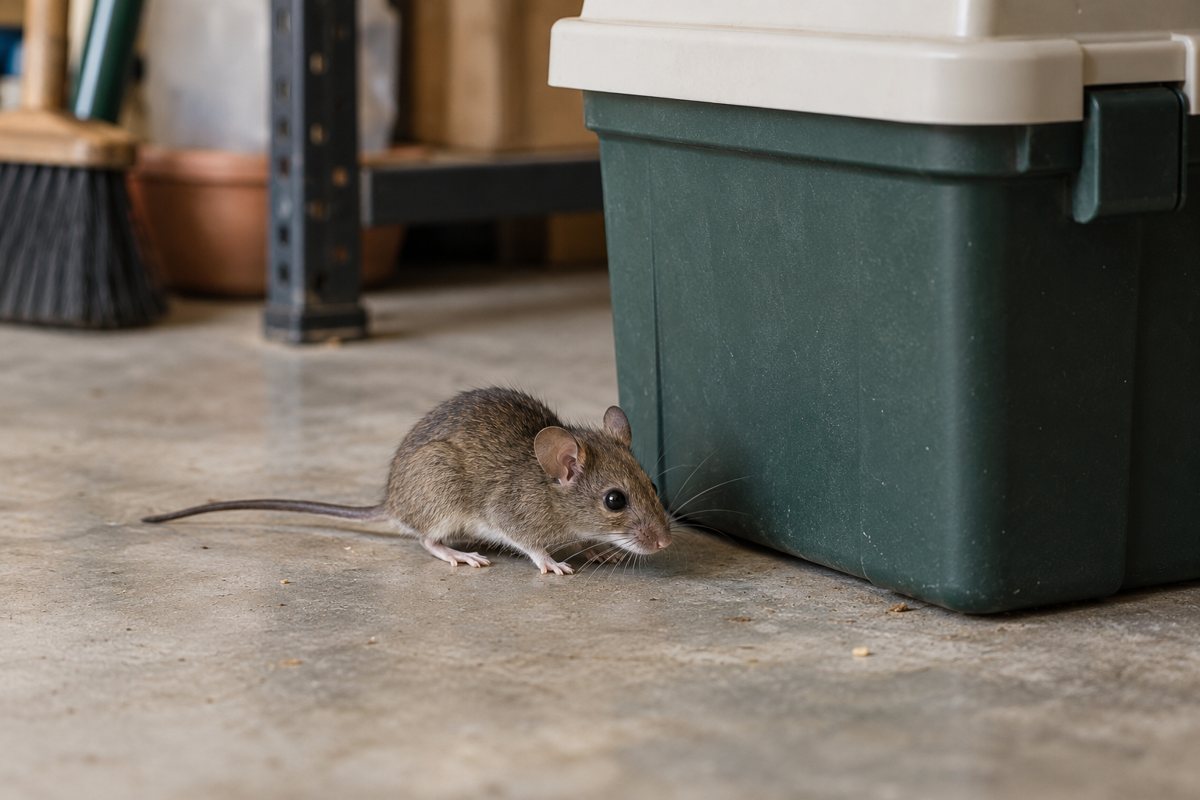
The practical starting point
Noises and damaged packaging can suggest rodents. However, they do not reliably identify the animal.
Use observations to guide an assessment rather than choosing control equipment from a guess.
Begin with what you can observe safely
Write down where the activity occurs: garage, kitchen, storage, ceiling or garden edge. Record when you noticed it and whether it repeats.
Avoid entering unsafe roof spaces or disturbing waste to gather evidence. A photograph from an accessible area can support an enquiry without direct contact.
The initial goal is to give the provider enough context to discuss the appropriate inspection.
You do not need to produce a trapped animal or make a species diagnosis before calling.
Appearance can help when the animal is visible
UC IPM describes house mice as smaller rodents and distinguishes roof rats from Norway rats using features such as body shape, ears and tail proportions. [1][2]
These comparisons help when a clear photograph or observation is available. They are not a dependable way to identify an animal from a fleeting shadow.
If you saw an animal briefly, say that.
A careful description of uncertainty is more useful than a confident label that could lead the enquiry in the wrong direction.
Locations are clues, not a diagnosis
Rat and mouse activity can involve different parts of a building. UC describes roof rats as capable climbers and discusses their use of higher spaces. [2]
That does not mean every ceiling noise is a roof rat. Building movement, other animals and unfamiliar sounds can be confused.
Explain the time, room and pattern.
Ask how an inspection will examine accessible evidence and how the provider distinguishes a confirmed finding from a possibility.
The treatment decision should follow the assessment rather than the noise alone.
Small gaps can matter
UC IPM states that mice can enter openings as small as a quarter inch.
Its rat guidance notes that rats, especially young rats, can fit beneath a door with a half-inch gap. [1][2]
These figures explain why apparently minor openings deserve attention.
They are general biological guidance, not proof that a particular gap is the active route into your home.
For a call, photograph the opening from a safe accessible position.
Ask whether entry-point assessment is included and how any sealing work will be coordinated with active control.
Droppings should not be handled for identification
Droppings may help an assessor understand activity. However, household visitors should not handle them to make a size comparison.
The photograph and location can be discussed without contact.
Do not dry-sweep or vacuum rodent waste. Seek appropriate cleanup guidance before disturbing contaminated areas, and explain the extent of the concern to the provider.
Control and contamination cleanup are different scopes.
A quote for rats or mice should not be assumed to include insulation removal, sanitation or restoration of a roof space.
Gnaw marks and packaging damage need context
Tell the provider what material was affected and where it was stored. A damaged food bag, an altered box and a building opening raise different questions.
Record the evidence without moving suspect material throughout occupied rooms. If the area is a business, identify who controls storage and access.
The purpose of the record is to help define the assessment.
It should not be used to estimate a rodent population or promise a specific treatment outcome from one visible sign.
Control and entry prevention are separate decisions
Removing or controlling activity inside the property is one task. Investigating and addressing access openings is another. A good enquiry asks about both.
CDC guidance emphasizes checking gaps and keeping food and waste contained as part of prevention. [3] The practical service question is which actions belong to the provider and which belong to the owner.
Ask the quote to distinguish devices, monitoring, sealing and cleanup. This makes a comparison more useful than looking only at the number of planned visits.
Make pets and occupants part of the discussion
Tell the provider about pets, children and areas used by occupants. Ask how any devices will be positioned, protected and checked.
Do not assume a control method is harmless because it is commonly used. If a product is proposed, obtain the relevant precautions for the actual work.
You can ask these questions before approving a quote.
A clear explanation of access and precautions is part of deciding whether the proposed scope fits the household.
A useful record for follow-up
Keep sightings, noises and visible signs in one dated list. Record new areas separately rather than merging everything into a general statement that activity continues.
Ask what the provider wants reported and how progress will be evaluated. Changes in location can matter to an assessment.
However, do not establish the explanation on their own.
If the property changes during service, mention new doors, utility work or altered storage.
Those details can affect the agreed scope and should be available when the plan is reviewed.
An example: noises above a bedroom
Imagine hearing scratching above one bedroom at night without seeing an animal. The sound is worth reporting.
However, it does not confirm rats, mice or the number present.
Note the dates, approximate times and room. Explain whether the attic is accessible and whether other signs have been found from safe occupied spaces.
There is no need to enter an unsafe void to make the enquiry more convincing.
The provider can discuss inspection and the evidence needed to select an approach. If access openings are also found, ask whether exclusion is included.
Keep any waste or insulation-cleanup concern as a separate scope question.
When to request an El Cajon assessment
Call when you have recurring activity, inaccessible concerns or uncertainty about identification and scope. Have the service address and a concise account ready.
Pest Control El Cajon covers qualifying addresses in 92019, 92020 and 92021.
Discuss rat and mouse control together with entry-point assessment if recurring access is a concern.
The first conversation should clarify the next assessment step.
It should not require you to buy equipment, climb into a void or disturb contamination before the property has been considered.
A simple decision checklist
Use this table to organize observations and questions. It does not diagnose the pest or prescribe a treatment.
The next step should fit the evidence and the property, with appropriate professional assessment where needed.
| What you notice | What to record or do | What to ask |
|---|---|---|
| Ceiling noise | Note room and time | What inspection access is required? |
| Visible opening | Photograph from safe ground level | Is exclusion included? |
| Waste or nesting material | Avoid disturbing it | What cleanup guidance or separate scope is needed? |
Keep a copy of the scope and any instructions alongside your notes.
If observations change, explain the new location or timing separately so the provider can review the situation accurately.
The example above is hypothetical. It illustrates a decision process and is not a customer story, completed project or claim about a treatment result.
Frequently asked questions
Can scratching identify rats or mice?
No. The sound, location and timing are clues for assessment, not a reliable species diagnosis.
Does an entry gap prove an infestation?
No. A gap may warrant assessment, but activity needs supporting evidence.
Does rodent service include cleanup?
Only if expressly agreed. Describe contamination and ask for a separate scope where needed.
Sources and further reading
References support the factual pest information in this guide. The checklists and hypothetical examples provide practical questions for an enquiry.
Follow instructions for the actual assessed work rather than treating general educational guidance as a treatment plan.
Sources accessed October 8, 2026. Publication dates on linked resources may be earlier. Coverage, pricing and methods must be confirmed for the actual property and service.
Discuss the relevant service
Read the service scope, then call with your address and observations. Qualifying service addresses are within 92019, 92020 or 92021.
Call (619) 478-0338