 Pest Control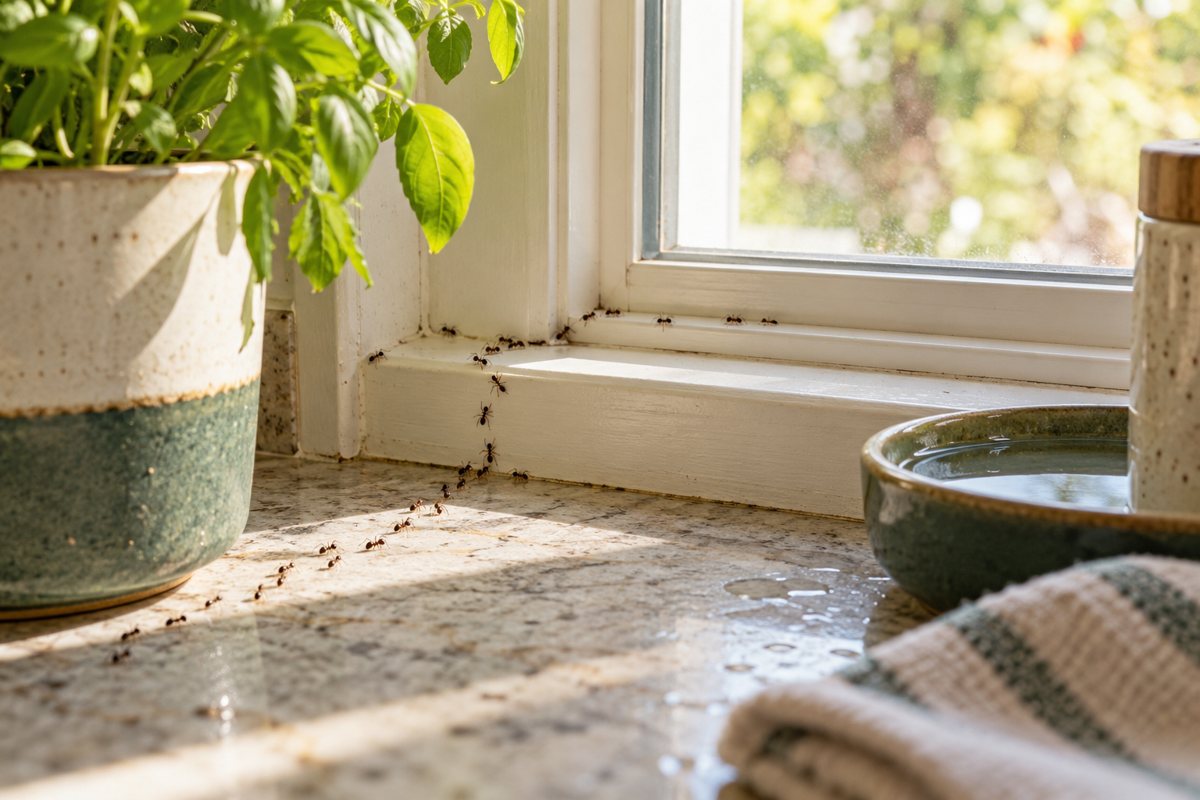
The practical starting point
A returning ant trail is a reason to look at identification, access and conditions around the home.
Removing visible ants may not explain why the next trail appears.
Start with the location, not a product
If ants return to the same counter, begin by recording where the trail appears.
Note the doorway, window or pipe area nearby, and whether the activity is constant or occasional.
You do not need to identify the species yourself. A clear photograph and a simple location record can make a professional enquiry more useful.
Avoid choosing several products just because each advertises a different type of ant.
The important distinction is between the immediate nuisance and its cause.
Cleaning a surface can make a room more comfortable while leaving an access route or attraction unchanged.
What the trail can tell you
UC IPM describes ants entering buildings for food, water, shelter and changing outdoor conditions. That makes a trail useful information. However, not a complete diagnosis. [1]
For your own record, note the room and the direction of travel. You might write: ants along the kitchen windowsill on three mornings.
That is clearer than saying the whole house is infested.
If the trail disappears, record that too. Do not assume disappearance proves a colony has been eliminated.
The activity you can see is only one part of the assessment.
Why identification changes the discussion
Different ants do not always use the same nesting sites or food sources. UC guidance explains that species identification helps select appropriate management. [1]
If a provider asks for a photograph, include a close view if it can be obtained safely and a wider view of the location.
A tiny, blurred insect on a blank background may give less context than the trail beside a known opening.
Winged insects need particular care. They can raise ant or termite questions.
Do not approve a termite treatment simply because wings were found; ask for identification and an explanation of the evidence.
Review the practical changes around the room
Use the activity as a prompt to review food storage, accessible water and recent changes.
A spill, a leaking fitting or a newly placed food bowl is worth mentioning.
The purpose is not to blame housekeeping. It is to make the assessment more specific.
A tidy kitchen can still have an entry route or an outdoor source beyond what is visible on the worktop.
Keep the review manageable. Address obvious spills and explain any maintenance issue to the provider.
There is no need to dismantle cabinetry or search inside electrical fittings to prepare for an enquiry.
Ask what the proposed treatment addresses
A useful treatment discussion explains the pest identified, the areas involved and the reason for the proposed approach.
EPA describes pest management as a sequence of identification, decisions and controls rather than a single automatic method. [2]
Ask whether the work addresses current activity, entry points, monitoring or a combination. Those are different elements of a service.
They should not be hidden behind a broad promise of protection.
Also ask what you should do after service. If cleaning or owner actions matter to the method, get those instructions clearly before the work starts.
Keep past product use in the record
Tell the provider what has already been used, where and when. Keep the packaging or product name available instead of describing every product as ant spray.
This does not mean you should apply more before the visit.
It gives the provider a clearer account of the property and allows precautions or next steps to be discussed.
Do not combine products, increase quantities or move a product into a use location that its label does not permit.
A new sighting is a reason to review the situation, not an instruction to escalate chemical use.
Indoor and outdoor goals are different
A practical household goal is to address activity affecting the building and its use.
It is different from trying to remove every ant from the surrounding landscape. UC IPM notes that complete outdoor elimination is unrealistic. [1]
When requesting a quote, identify the spaces that matter to you: the kitchen, a patio door, a storage area or a business counter.
This helps define the work without an impossible promise.
If the trail crosses shared property, explain which areas you can authorize.
A provider cannot assume permission to inspect or treat neighboring land simply because it is close.
Evaluate recurring activity with better questions
If ants return after service, note whether it is the same room, same route and same apparent insect.
Ask the provider how those observations fit the original assessment.
A new trail does not, on its own, explain whether the cause is a missed opening, a new attraction, a different pest or a change outside.
The next decision needs evidence.
Ask what follow-up is included, whether another inspection is appropriate and which owner actions should continue.
Keep the written scope available so additional work and covered follow-up are not confused.
Make a useful call about your El Cajon home
Have your ZIP code, affected rooms, first sighting date and photographs ready. Say whether the problem involves an apartment, detached home or commercial space.
Our coverage is limited to qualifying addresses in 92019, 92020 and 92021. Neighborhood names overlap those boundaries, so use the actual service address when checking availability.
You can ask for ant-control help without knowing the species.
The next step is to discuss the evidence and arrange the appropriate assessment, not to choose a treatment package from a guess.
An example: a trail that returns to the window
Imagine a homeowner who wipes ants from the counter, then sees another trail along the same windowsill the next morning.
The useful record is the repeated location, not a conclusion that the whole house needs stronger treatment.
The homeowner can photograph the route, note any visible moisture and explain the products already used.
The provider can then assess the insect and the accessible area before recommending work.
If the trail later appears at a patio door, record that as a new observation. It may affect the assessment.
However, it does not by itself establish that the original treatment failed. Keeping the two locations distinct makes the follow-up conversation more accurate.
A short checklist for the next week
Keep one record with dates and locations instead of relying on memory.
Photograph visible trails when convenient, note relevant maintenance changes and store product information in the same place.
Before a scheduled visit, ask which areas need access. Afterward, keep the instructions and observe what the provider has asked you to monitor.
Do not judge the whole result from a single hour without visible ants.
If conditions change or activity becomes harder to describe, call with the record.
A specific account makes it easier to discuss whether the plan needs clarification or a fresh assessment.
A simple decision checklist
Use this table to organize observations and questions. It does not diagnose the pest or prescribe a treatment.
The next step should fit the evidence and the property, with appropriate professional assessment where needed.
| What you notice | What to record or do | What to ask |
|---|---|---|
| Same route returns | Record the location and timing | Does the assessment cover the route and attraction? |
| Winged insects appear | Photograph safely | Is identification needed before choosing termite service? |
| Activity moves rooms | Keep a separate entry in the log | Does the new location change the scope? |
Keep a copy of the scope and any instructions alongside your notes.
If observations change, explain the new location or timing separately so the provider can review the situation accurately.
The example above is hypothetical. It illustrates a decision process and is not a customer story, completed project or claim about a treatment result.
Frequently asked questions
Does a returning trail mean the home is dirty?
No. The assessment considers identification, access and surrounding conditions. Give the provider a factual account without assuming a cause.
Can a photograph replace an inspection?
It may help the initial enquiry, but the property context and accessible areas can still require inspection.
Should I switch products whenever ants return?
Discuss the observations and past product use first. Repeatedly changing products does not establish the cause or appropriate next step.
Sources and further reading
References support the factual pest information in this guide. The checklists and hypothetical examples provide practical questions for an enquiry.
Follow instructions for the actual assessed work rather than treating general educational guidance as a treatment plan.
Sources accessed October 8, 2026. Publication dates on linked resources may be earlier. Coverage, pricing and methods must be confirmed for the actual property and service.
Discuss the relevant service
Read the service scope, then call with your address and observations. Qualifying service addresses are within 92019, 92020 or 92021.
Call (619) 478-0338